



Earache (following remote assessment)
Advice for professionals
Advice for parents and carers after remote assessment for earache
Ear infections are extremely common in children. They are caused by either an infection of the middle ear that causes inflammation and a build-up of fluid (otitis media) or by an infection of the skin of the ear canal (otitis externa). Otitis externa is also known as ‘swimmers ear’ because it occurs more commonly when water enters the ear canal. Although most children with otitis media and otitis externa need no specific treatment, they will need to seen by a healthcare professional if they have pus coming out of their ear, in order to decide if treatment is required.
Symptoms of otitis media:
-
Earache
-
Fever may be present
-
Misery
-
Pulling, tugging or rubbing ear
-
Slight hearing loss
In most cases, the symptoms of otitis media develop quickly and get better by themselves in a few days. In some cases pus may run out of the ear, this is the fluid that had built up behind the ear drum causing a small hole in the eardrum; this tends to heal up by itself.
Symptoms of otitis externa:
-
Pain and tenderness in the ear canal
-
Itchiness
-
Foul smelling yellow or green pus in the ear canal
-
Fever
-
Reduced hearing
-
Noises inside the ear, such as buzzing, humming or ringing (tinnitus)
-
Otitis externa is usually one sided (unilateral)
When should you worry?
If your child has any of the following:
- Is going blue around the lips
- Has pauses in their breathing (apnoeas) or has an irregular breathing pattern
- Too breathless to talk / eat or drink
- Becomes pale, mottled and feel abnormally cold to touch
- Has a fit / seizure
- Becomes extremely agitated (crying inconsolably despite distraction), confused or very lethargic (difficult to wake)
- Develops a rash that does not disappear with pressure (the 'Glass Test')
- Is under 3 months of age with a temperature of 38°C / 100.4°F or above (unless fever in the 48 hours following vaccinations and no other red or amber features)
You need urgent help
Go to the nearest Hospital Emergency (A&E) Department or phone 999
If your child has any of the following:
- Has pus coming out of the ear
- Develops swelling behind the ear or increasing pain / redness behind the ear
- Develops dizziness or is losing their balance
- Is becoming drowsy (excessively sleepy) or irritable (unable to settle them with toys, TV, food or picking up) - especially if they remain drowsy or irritable despite their fever coming down
- Is complaining of a severe headache and neck stiffness/pain or discomfort with bright lights (photophobia)
- Is having breathing problems, such as rapid, shortness of breath or laboured breathing (drawing in of muscles below the lower ribs when they breath in)
- Seems dehydrated (sunken eyes, drowsy or no urine passed for 12 hours)
- Has extreme shivering or complains of muscle pain
- Is 3-6 months of age with a temperature of 39°C / 102.2°F or above (but fever is common in babies up to 2 days after they receive vaccinations)
- Continues to have a fever of 38.0°C or above for more than 5 days
- Is getting worse or if you are worried
You need to contact a doctor or nurse today
Please ring your GP surgery or contact NHS 111 - dial 111 or for children aged 5 years and above visit 111.nhs.uk
If none of the above features are present
Self care
Continue providing your child’s care at home. If you are still concerned about your child, contact NHS 111 – dial 111 or for children aged 5 years and above visit 111.nhs.uk
This content has been developed by healthcare professionals from across the UK in collaboration with the RCPCH.
Treatment
Most children with earache do not require treatment with antibiotics. Antibiotics rarely speed up recovery and often cause side effects such as rash and diarrhoea. They will also promote the development of antibiotic resistant bacteria in your child.
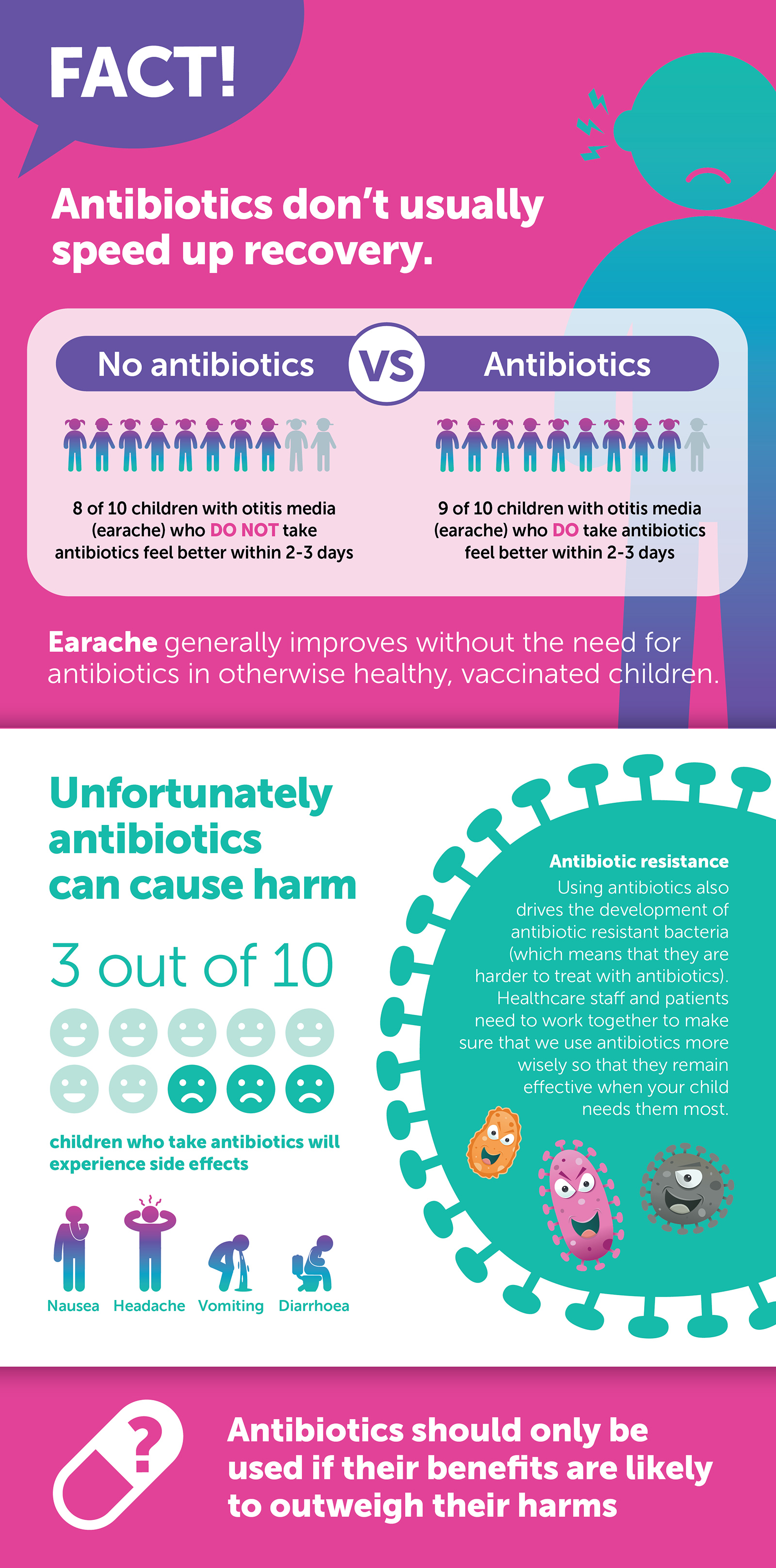
Antibiotics are usually only considered if your child:
- Is under 6 months of age and has otitis media (a middle ear infection)
- Is between 6 months and 2 years of age with infection in both ears, or with associated symptoms such as altered sleep, fever and overwhelming misery
- Has pus draining from their ear
- Has a serious health condition that makes them more vulnerable to serious infection
If your child has any features of severe infection (amber or red features above), they will need to be urgently assessed by a healthcare professional
You can help relieve symptoms by:
- Giving your child paracetamol or ibuprofen to help relieve pain
- Encouraging your child to drink plenty of fluids
- Give calpol if necessary
Prevention
It is not possible to prevent ear infections; however, you can do things that may reduce your child’s chances of developing the condition.
- Avoid cleaning your child’s ears with cotton buds – this may damage and irritate the ear canal and pushes wax further into the ear. Wax is designed to come out by itself
- Try not to let soap or shampoo get into your child’s ear canal
- Try to keep your child’s ears dry; if water gets in, tip it out as soon as possible. However, this can be extremely challenging in young children!
- Ensure your child is up-to-date with their immunisations
- Avoid exposing your child to smoky environments (passive smoking)